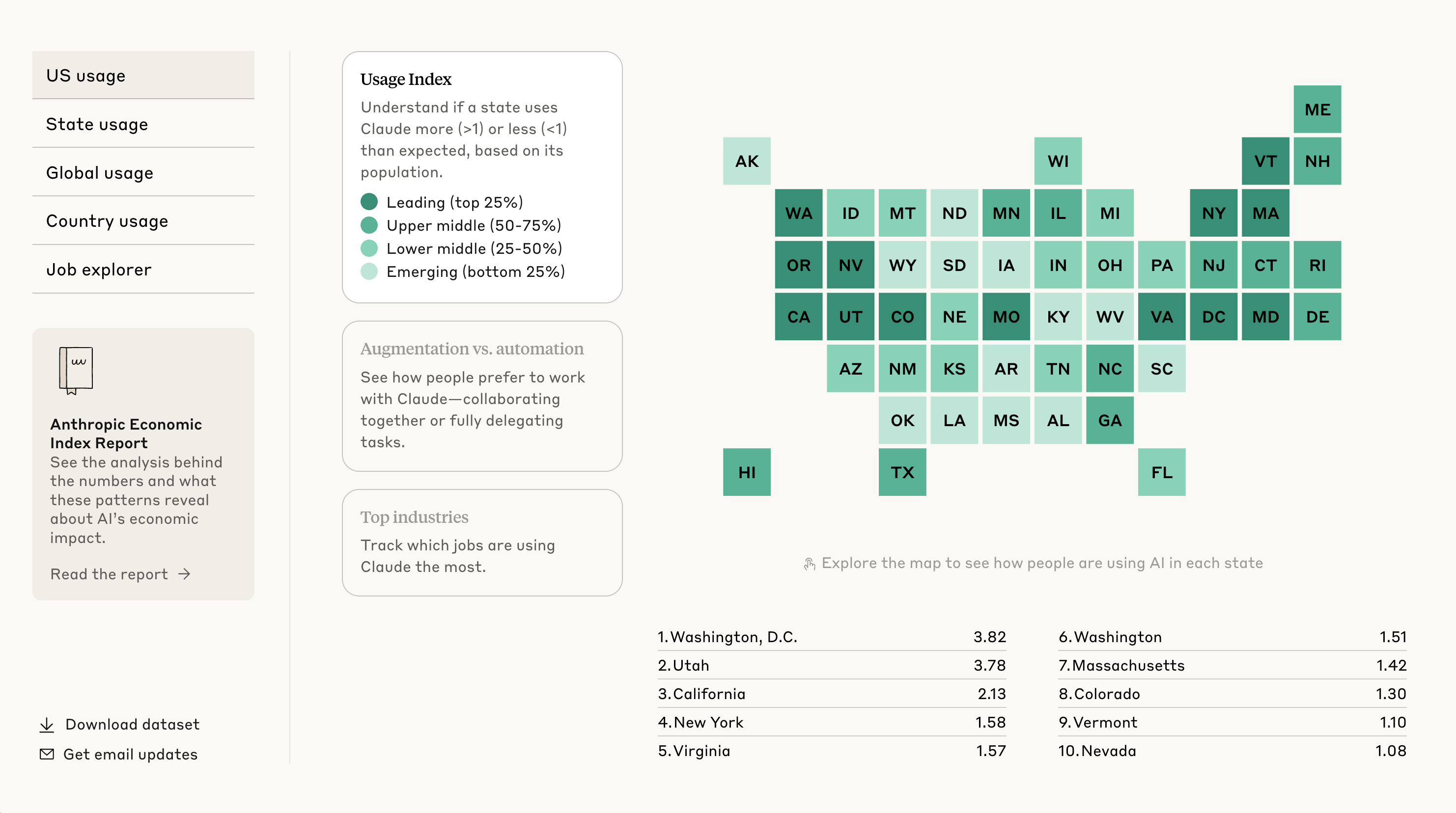
Artificial intelligence (AI) continues to transform industries and reshape economic landscapes across the globe. Recognizing the importance of understanding these changes, Anthropic has developed an innovative tool called the Anthropic Economic Index. This index aims to measure and analyze the effects of AI on various economic indicators, providing valuable insights for policymakers, businesses, and researchers.
The Anthropic Economic Index is designed to track the influence of AI advancements on economic growth, employment patterns, productivity levels, and income distribution. By aggregating data from multiple sources, the index offers a comprehensive overview of how AI technologies are driving shifts in the global economy.
One of the key features of the index is its ability to quantify the economic contributions of AI-related innovations. This includes assessing the impact of automation, machine learning, and natural language processing on different sectors such as manufacturing, healthcare, finance, and retail. The index also considers the potential displacement of jobs and the creation of new employment opportunities resulting from AI adoption.
Moreover, the Anthropic Economic Index provides insights into regional disparities in AI development and deployment. It highlights which countries and industries are benefiting most from AI advancements and identifies areas where policy interventions may be necessary to ensure equitable growth.
As AI technology continues to evolve rapidly, the index serves as a critical tool for understanding its long-term economic implications. Policymakers can utilize this data to craft strategies that maximize benefits while mitigating risks associated with AI integration. Businesses can also leverage these insights to make informed investment decisions and adapt their operations accordingly.
Overall, the Anthropic Economic Index represents a significant step forward in quantifying the economic impact of artificial intelligence. By providing a clear and data-driven picture of AI's influence on the economy, it helps stakeholders navigate the complexities of this transformative technology and prepare for the future economic landscape.